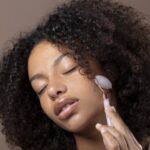

A new generation of African-founded skincare brands is building from first principles formulations designed for African skin, supply chains rooted in African ingredients, communities before advertising. BBA examines what makes these founders different, and what they are building that the rest of the industry cannot easily copy.

The Numbers
42.4% — Skincare’s share of total Africa cosmetics market revenue, 2024 — the dominant category. Source: Market Data Forecast, Africa Cosmetics Market, 2026
17.5% — Projected annual growth rate for Nigeria’s skincare market to 2029. Source: StrategyHelix, Nigeria Skin Care Products Market, 2024
60% — Female labour force participation rate in Sub-Saharan Africa, 2023 — significantly above the global average of 47%. Source: World Bank, cited in Market Data Forecast, 2026
18.3% — CAGR of online distribution in the Africa cosmetics market, 2025–2033 — the fastest-growing channel. Source: Market Data Forecast, Africa Cosmetics Market, 2026
The African skincare founder of 2026 is a different kind of beauty entrepreneur. She is likely to have a background in chemistry, pharmacy, dermatology, or biochemistry or to have built formulation expertise through years of disciplined, self-directed study. She understands her consumers at a depth that global beauty multinationals rarely achieve, because she is, in most cases, her own consumer. And she is building businesses that begin with product truth with genuine understanding of what African skin needs and how to address it rather than with marketing ambition that goes in search of a product to justify it.
The Africa cosmetics market is being driven by rising consumer awareness about skin health and the growing prevalence of skin conditions such as hyperpigmentation, acne, and dryness due to harsh climatic conditions and the proliferation of dermatologist-endorsed brands and the expansion of local skincare startups have further strengthened consumer trust and product adoption. Market Data Forecast The founders building in this environment are not filling a gap that nobody noticed. They are responding to demand that existed for decades and was simply never met.
The Formulation Advantage
The technical quality of African-founded skincare brands has improved substantially over the last decade. This improvement is not accidental. It reflects investment in formulation education, access to global ingredient supply networks, and the development of a genuine community of practice among African beauty chemists and formulators who share knowledge and collectively raise the technical floor of the industry.
African and diasporic brands are attempting to cash in on increasing demand for science-backed products, whilst also spotlighting African culture and ingredients. Emerging names like South Africa’s Lelive and Nigeria’s Dang are prioritising clinical innovation and man-made ingredients alongside natural botanicals, signalling a shift toward science-backed formulations, a twist on a historical exchange in which global beauty giants used African-grown natural ingredients for decades while African brands had limited access to the science that maximised those ingredients’ potential. Business of Fashion
The combination of African botanical knowledge and modern cosmetic science is the technical proposition that the current generation of African skincare founders is building. Baobab oil alone may not treat hyperpigmentation effectively. But baobab oil paired with tranexamic acid or niacinamide in a formulation designed for melanin-rich skin, developed by a founder who has lived that skin’s reality, and tested in the climate where that skin actually lives that is a product offering that neither pure-natural African brands nor pure-science Western brands can replicate alone.

Community Infrastructure
What distinguishes the most successful of these founders is their relationship with community — a relationship that predates the product and survives the competition. Before they had products to sell, they had conversations. With potential customers on Instagram and YouTube, with dermatologists who understood the specific needs of melanin-rich skin, with women who had spent years navigating beauty aisles that were not designed for them.
The commercial logic of community-first brand building extends well beyond good storytelling. Community-built brands have demonstrably lower customer acquisition costs, because word of mouth and peer recommendation replace paid advertising as the primary discovery mechanism. They have better product-market fit, because continuous community feedback improves formulations before and after launch. And they have stronger customer retention, because consumers who feel genuine ownership of a brand’s story are significantly less likely to defect to a competitor on the basis of price or availability.
Social media has played a pivotal role in shaping beauty routines in Africa, with platforms like Instagram and TikTok enabling direct brand-to-consumer engagement, particularly among Gen Z consumers who account for a growing share of beauty spending. Market Data Forecast The founders who built their communities before building their products are now operating these social platforms as distribution infrastructure, not just marketing channels. The distinction matters.
“These botanicals — known and cherished by African communities — add a layer of culture and depth to a brand. That is important for consumers who say a brand’s
values can influence their purchases.”— Okikiola Emaleku (“The Skin Priest”),
aesthetician and beauty influencer, via Business of Fashion, 2025
What Comes Next
The generation of African skincare founders building today is operating in a more supportive environment than any of its predecessors. The online distribution segment is the fastest-growing channel in the Africa cosmetics market, expanding at a CAGR of 18.3% from 2025 to 2033, with social commerce through Facebook Marketplace, WhatsApp commerce, and Instagram Shops becoming popular avenues for micro entrepreneurs to sell directly to consumers. Market Data Forecast The infrastructure for building and monetising a beauty brand community has improved dramatically, and continues to improve.
The remaining constraints are real. Access to commercial-scale manufacturing at a price point that preserves margin structure for an independent brand is genuinely difficult in most African markets. Professional services, regulatory consultants, IP attorneys, brand strategists with beauty sector expertise are scarce and expensive relative to demand. International market entry requires resources and relationships that most African beauty founders cannot access without significant external support.
The brands that navigate these challenges successfully will define the African skincare category for the next decade. The consumer is ready. The talent is here. The formulation capability is better than it has ever been. The remaining constraint is infrastructure, capital, and the ecosystem support that translates product excellence into durable business success. The African skincare founder is rewriting the rules because the conventional beauty playbook was not written for her market, her consumer, or her ingredients. The playbook she is writing is better. The world is beginning to notice.
Sources
Market Data Forecast, Africa Cosmetics Market (2026); StrategyHelix, Nigeria Skin Care Products Market (2024); Business of Fashion, African Skincare Brands Head to the Lab (2025); World Bank, Female Labour Force Participation, Sub-Saharan Africa (2023); Statista, Skin Care Nigeria (2025); BeautyMatter, Indigenous African Ingredients Take a Spot on Beauty’s Global Stages (2024).